
SAP Digital Access Licensing:
Defending the £1M+ “Indirect Use” Liability
A Strategic 2026 Audit Defence Guide for UK Enterprises navigating S/4HANA, Telemetry, and Document-Based Licensing.
The Shift from Named Users to Digital Access
In the current enterprise IT landscape, there is a palpable tension between clinging to legacy contracts and embracing the inevitable shift toward S/4HANA and RISE with SAP. For many UK businesses, the most significant point of friction in this transition isn’t the technical migration of data, but the opaque, highly punitive world of SAP Digital Access Licensing (formerly known as Indirect Use).
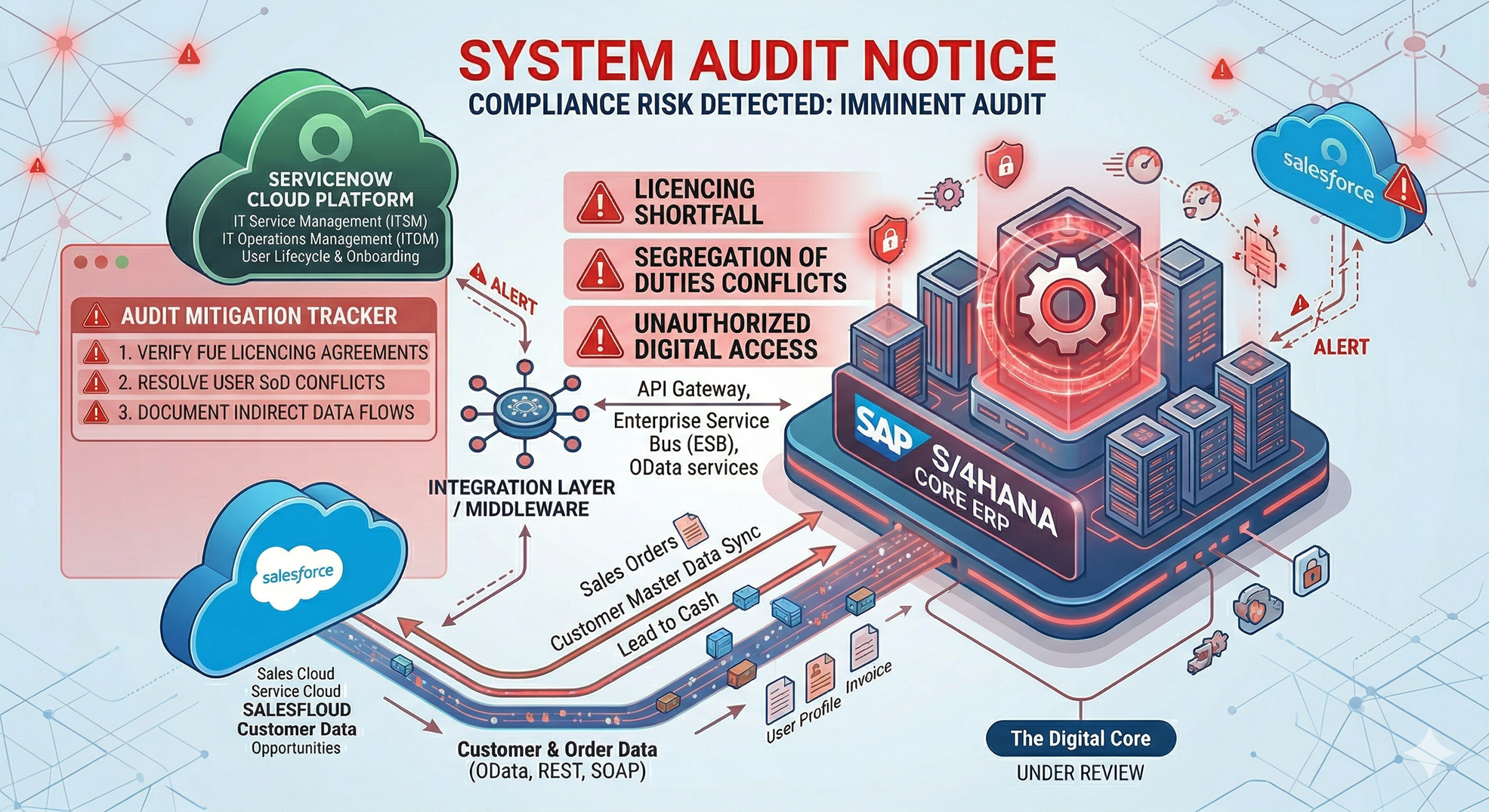
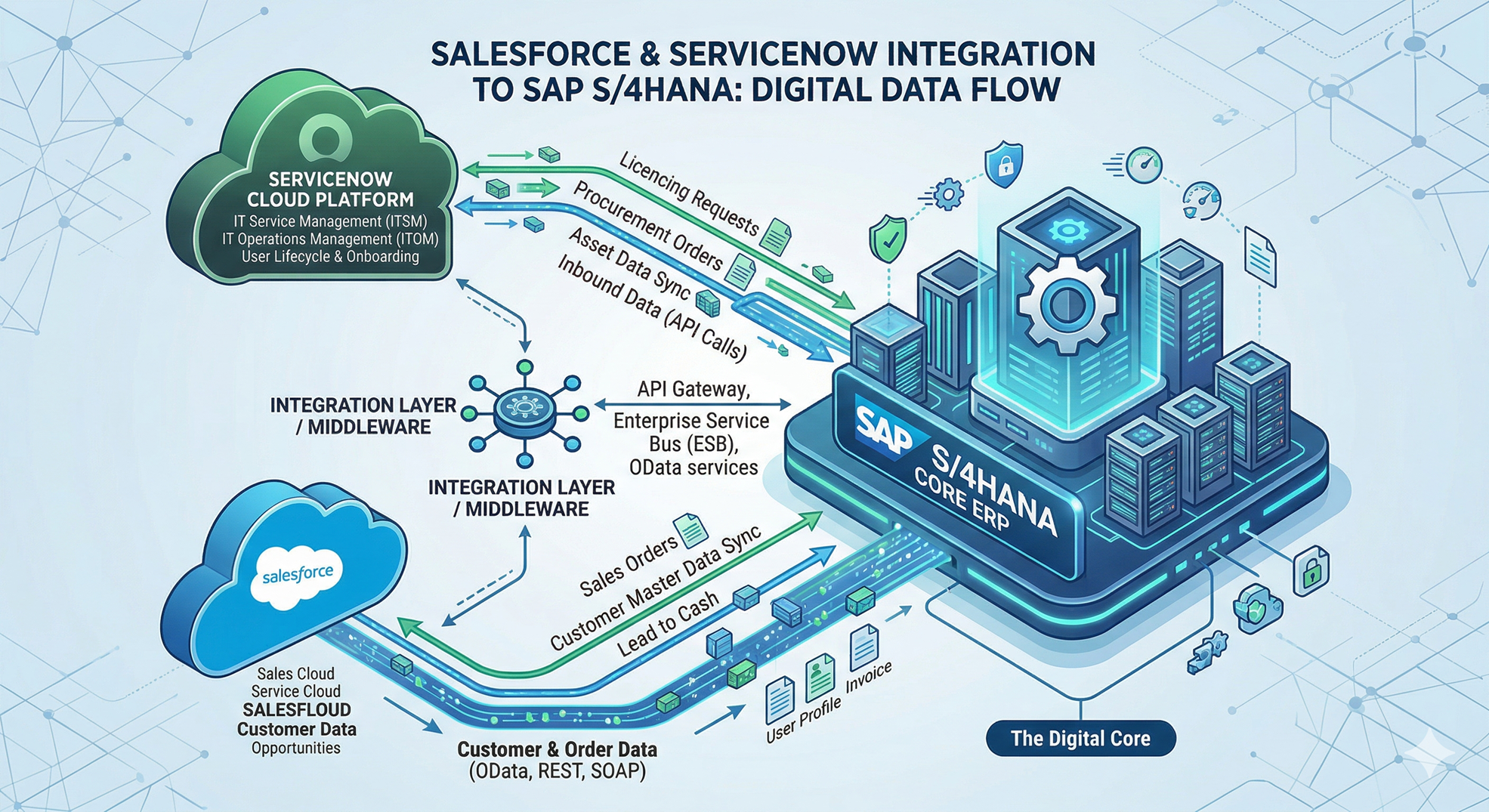
Historically, SAP licensing was built almost entirely on a “Named User” model. You paid a fee based on the physical people sitting at desks, logging directly into the SAP GUI. However, in a modern, hyper-connected enterprise, your SAP core rarely operates in isolation. It is constantly “talking” to third-party systems via APIs—whether that is a Salesforce CRM triggering a sales order, a ServiceNow ITSM creating a maintenance ticket, or autonomous IoT sensors on a factory floor pushing material movements.
Every time one of these external systems triggers a transactional event within your SAP core, it creates a Digital Access event. SAP’s modern position is that if a non-SAP system leverages the processing power of the digital core, it is a billable event. This is SAP Digital Access Licensing and you need to be on top of it.

While some consultancies advocate for stubbornly holding onto legacy licensing models to avoid this, at TangoTec, we view the shift differently. SAP Digital Access Licensing is no longer a looming threat; it is a rigid operational reality baked into S/4HANA. When managed proactively with precision and the right tooling, it transitions from a dreaded compliance headache into a transparent, predictable, and manageable value proposition.
The £1M+ Risk: The S/4HANA “Telemetry Trap”
The primary financial risk for UK firms in 2026 is what we term the “Telemetry Trap.” SAP has deeply integrated sophisticated automated monitoring within the S/4HANA core. GLAC (Global Licence Audit and Compliance) auditors no longer need to sit in your office for a week conducting interviews and manual spot-checks; they can simply pull the telemetry logs to see, in real-time, exactly how many documents are being created by non-SAP sources.
If you haven’t formally transitioned your contract to the Document-Based Accounting model (the official “SAP Digital Access Licensing” model), you are likely still operating under the ambiguous legacy “Indirect Use” rules. This is where the financial liability explodes.
Under those old rules, SAP could technically claim that you require a full “Named User” license for every single external person interacting with your Salesforce instance or your B2B e-commerce platform—because their actions eventually touch SAP. This interpretation can easily spiral into unbudgeted penalties in the millions.
Why “Moving with the Tide” is the Superior Strategy
Rather than desperately fighting an unwinnable battle over legacy contracts that were never designed for an API-led, cloud-first world, forward-thinking CIOs are proactively migrating to the official Document-Based SAP Digital Access Licensing model. The strategic and financial benefits of making this switch deliberately (rather than during an audit panic) are clear:
- Predictability: You stop paying for “potential” users accessing external systems and start paying strictly for actual business outcomes (the volume of documents created).
- Audit Immunity: Once you officially adopt the Document-based model, the total “User Count” for your indirect systems (like Salesforce or Webshops) becomes entirely irrelevant to the auditor.
- Predictive Optimisation: By using live reporting and middleware analysis, you can see exactly where your licensing spend is being generated and optimise your API architecture to reduce unnecessary “document noise.”
To successfully navigate this, you must ensure your S/4HANA Licence Optimisation strategy accounts for both human FUEs and Digital Access documents simultaneously.
Technical Insight: The 9 Document Multipliers
Under the official SAP Digital Access model, you are charged based on the creation of nine specific document types. However, not all documents are created equal. To protect high-volume, low-margin transactional businesses (such as manufacturing and logistics), SAP has implemented a “Weighting” or multiplier system.
It is crucial to understand that only the initial creation of the document by an external system counts towards your license pool. Subsequent reads, updates, or deletions triggered by that external system are generally considered out of scope and are effectively “free.”
A common audit trap is the “Double-Dip”—where a company is mistakenly charged for both a Sales Order and the subsequent Invoice, even though the Invoice was a secondary action. Identifying these architectural errors requires deep analysis.
| Document Category | Document Types Included | Multiplier Weighting |
|---|---|---|
| High-Value Documents | Sales, Purchase, Invoice, Manufacturing | 1.0 (Full Cost) |
| Service & Quality | Service & Maintenance, Quality Management, Time Management | 1.0 (Full Cost) |
| High-Volume Documents | Financial Documents, Material Documents | 0.2 (80% Discount) |
Without high-end tooling to filter out the noise and accurately apply these 0.2 multipliers, UK enterprises frequently overpay, simply because they cannot prove to the auditor which documents were primary creations versus secondary updates.
Speak to an SAP Licensing Expert
Don’t navigate the S/4HANA migration or a GLAC audit in the dark. Contact our UK-based team for a confidential review of your SAP Digital Access licensing exposure.
Email: info@tangotec.co.uk | Call: 01905 621108
Or leave your details below and a senior architect will be in touch: