
Built for Speed, Equipped for Proof: Solving the SAP Change Logging Dilemma
Ask any SAP Basis lead why full SAP change logging is switched off in production, and you will get a knowing smile and two words: system performance. Turning off heavy native logging was smart engineering to stop database bloat from killing server speed. But systems built purely for lightning-fast transactions were never equipped for proof.
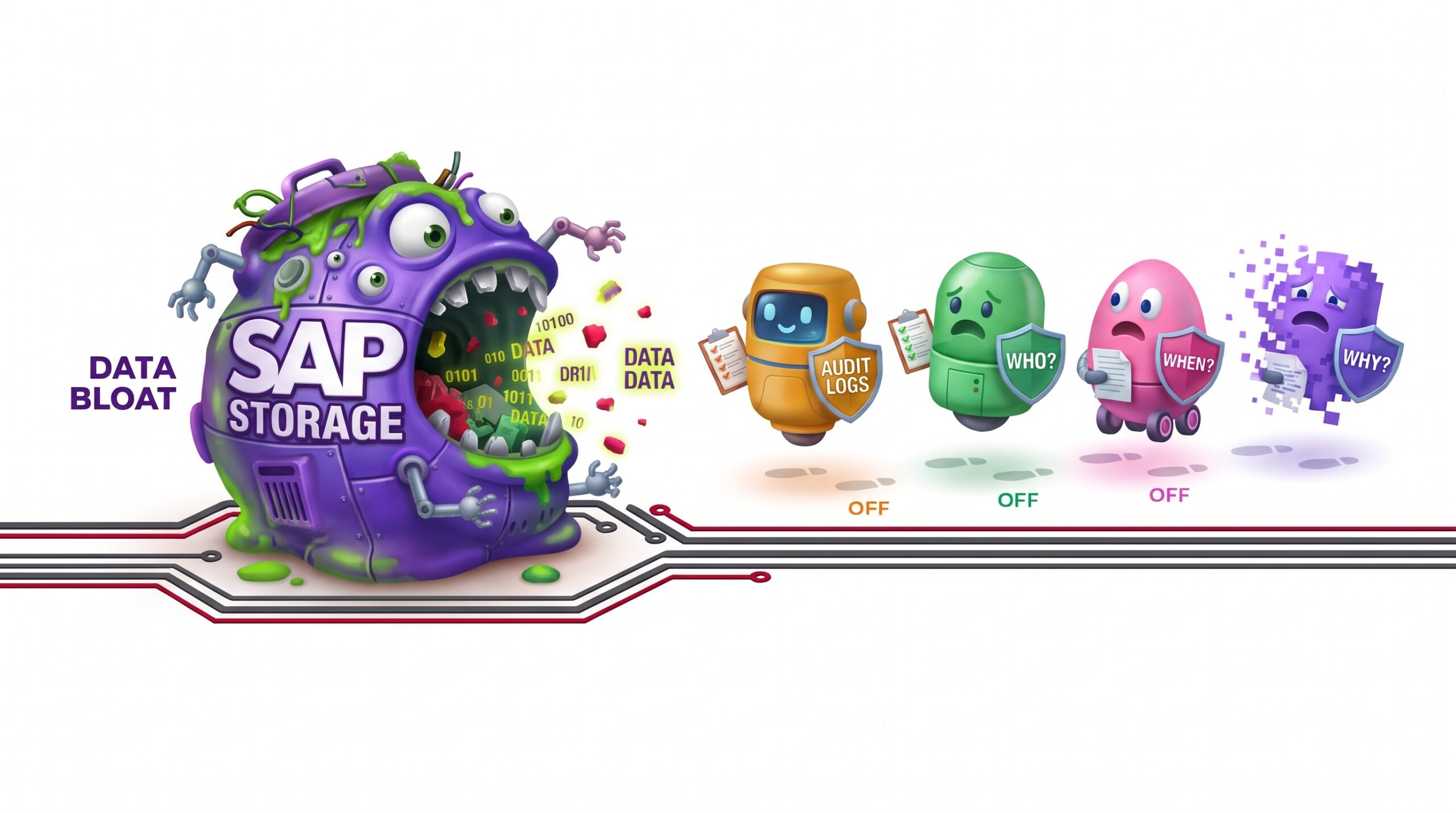
Think about how an enterprise SAP system operates day to day. It is the operational heart of a business, processing thousands of sales orders, stock movements, and financial postings every minute. To keep supply chains moving and invoices clearing without delays, the database must respond in milliseconds.
The Technical Reality: Why SAP Change Logging Stays Off
SAP is not to blame for this situation. Modern SAP architectures, especially in-memory HANA engines running directly inside active server RAM, are designed specifically for lightning-fast transactional throughput. Because active RAM is premium computing real estate, filling it up with massive historical change trails creates immense friction.
As documented directly in the official SAP Help Portal on Table Logging, switching on broad native logging across high-traffic tables requires the database to do double the work. When full SAP change logging is forced through standard table parameters like rec/client, the system must write the business update and then write an exhaustive before-and-after log entry. Over time, that creates three major technical roadblocks:
- Database Locking: Concurrent updates compete for table locks, making everyday business screens hang while transactions wait in line.
- Active Memory Bloat: Gigabytes of audit records take up expensive RAM, forcing organisations to pay for bigger hosting hardware just to store historical text.
- System Sluggishness: Daily reporting slows down because background queries have to sift through millions of historical log rows.
Faced with that engineering reality, Basis teams did exactly what made sense: they stripped native logging back to the absolute bare minimum to keep daily business running smoothly.
The Compliance Dilemma: Why SAP Change Logging Matters
While keeping logging lean protects daily system performance, everyday business life carries on. Staff change desks, move between departments, or cover for colleagues on leave. Accounts Payable teams require urgent access adjustments to pay critical suppliers. Technical support teams need emergency elevated access to apply hotfixes in the middle of the night.
None of this happens out of malice; it is simply everyday business change. But because native table logging was turned off to protect memory, standard SAP only records the end state: what permissions exist right now. Without dedicated SAP change logging, the crucial story of who granted the change, when it went live, and why it was approved simply dissolves into thin air.
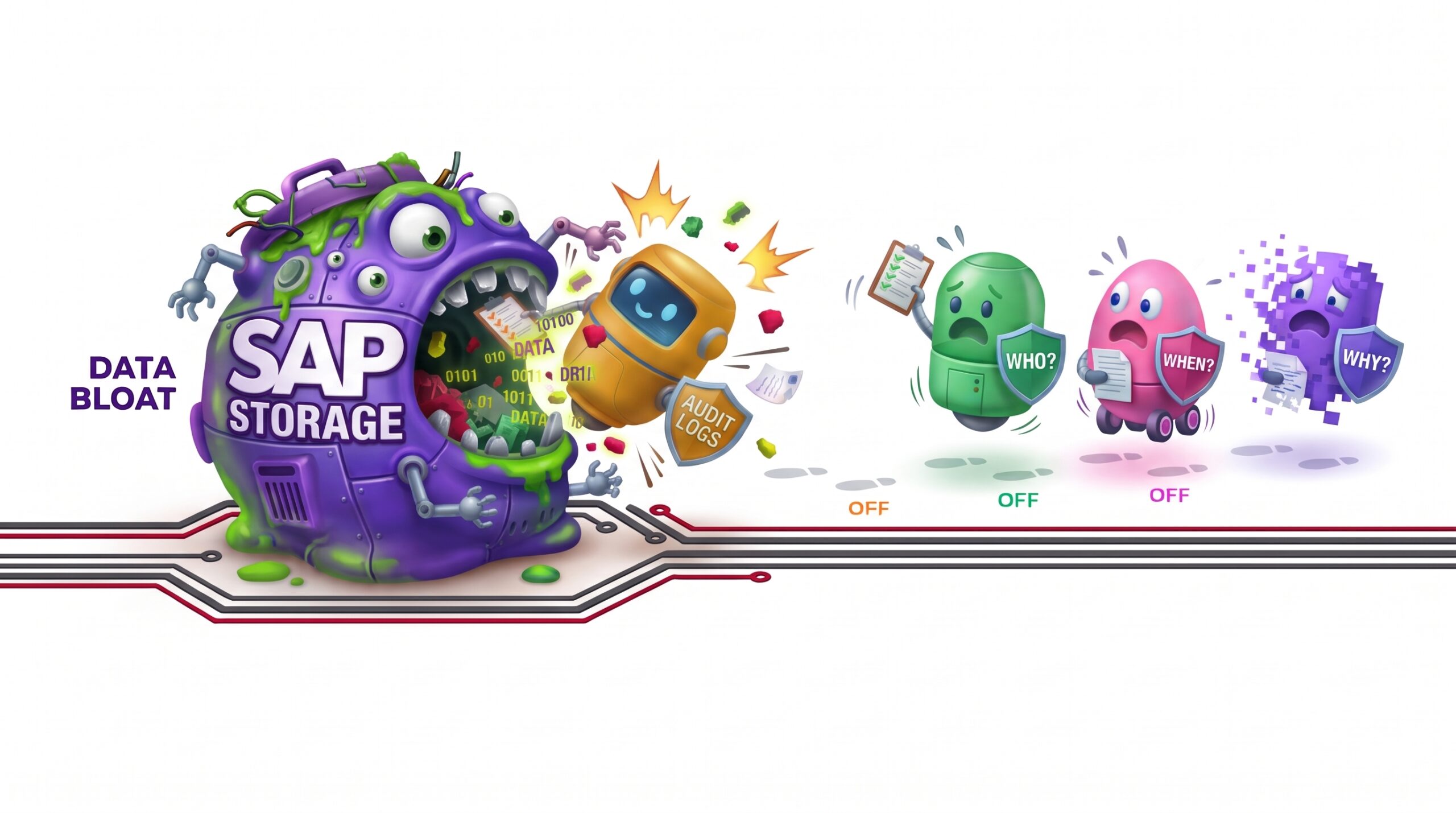
Then audit season arrives.
Under formal governance rules like Provision 29 of the UK Corporate Governance Code from the Financial Reporting Council, enterprise directors are personally on the hook for their internal financial controls. Furthermore, worldwide audit standards defined by ISACA IT General Controls (ITGC) require irrefutable proof of change authorisations. In the absence of complete SAP change logging, auditors demand answers that the system cannot produce:
- Who executed the change?
- When was it put into production?
- Why was it approved by the business in the first place?
When the database cannot answer those questions, organisations face an exhausting administrative scramble. Valuable team members who should be working on strategic projects, launching new features, or growing the business are pulled away from their desks. Instead, they spend weeks hunting through disconnected ticketing systems, digging through archived transport requests, and trawling chaotic email inboxes just to assemble compliance spreadsheets.
The Operational Reality: Manual Slog vs. Automation
Internal audit teams follow the strict IIA Global Internal Audit Standards, which demand verifiable documentary evidence rather than verbal reassurances. Historically, keeping an unlogged system compliant required large internal teams or external resources to manually verify access, assemble audit dossiers, and maintain governance. Here is how that manual burden compares against automated SAP change logging powered by Cortex:
| Operational Factor | Manual Governance Scramble | Cortex Controlled Automation |
|---|---|---|
| Database Impact | Heavy table logging causes server crawl, database locks, and storage bloat. | Ultra-lightweight collection running quietly in the background with minimal database drag. |
| Audit Preparation | Weeks of manual detective work trawling emails, transport requests, and spreadsheets. | Instant 1-click export of an immutable, tamper-proof forensic change ledger. |
| Team Productivity | Valuable internal teams waste hundreds of hours on repetitive compliance admin. | Staff remain focused on high-value projects that drive business growth and customer value. |
| Emergency Access | Temporary keys are easily forgotten, leaving dangerous backdoors open for weeks. | Time-boxed Firefighter access with automated countdown timers that auto-revoke privileges. |
| Business Disruption | High operational friction during audits and testing phases. | Continuous, proactive compliance delivered with minimal disruption and minimal downtime. |
The Outdated Compromise is Over
For years, enterprises felt trapped between two bad options: strangle database performance with heavy logging to please the auditors, or turn logging off to keep the system fast and pray during reviews. That compromise is no longer necessary.
The Rescue: Intelligent SAP Change Logging with PULSE & VAULT
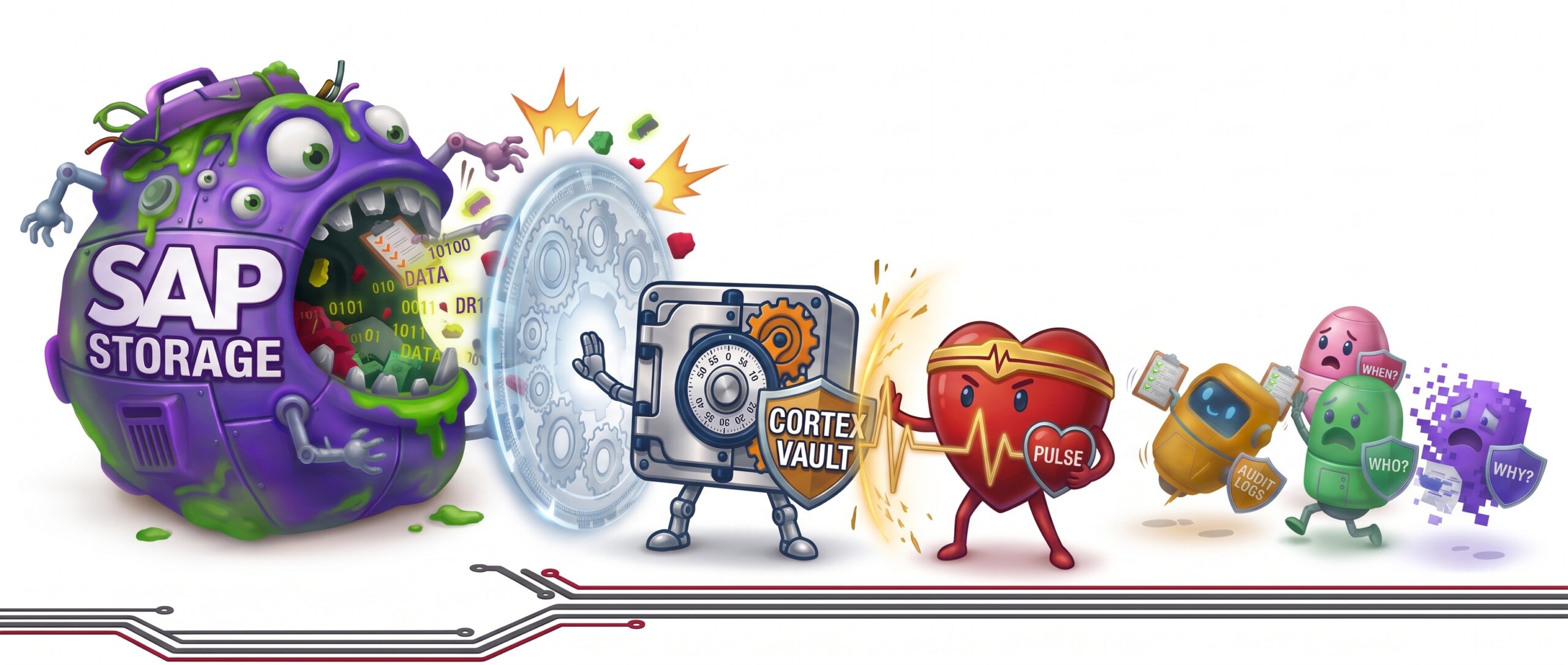
At Tango Technologies, we built the Cortex Suite natively inside SAP ABAP (within our own dedicated /TANGO/ namespace). Instead of forcing the core database to do heavy logging, Cortex deploys two dedicated modules that deliver seamless, automated SAP change logging while keeping systems fast:
1. Cortex VAULT: High-Performance SAP Change Logging Analytics
Cortex VAULT acts as the digital flight recorder for your SAP system. Rather than swelling your expensive in-memory database, VAULT uses high-performance log compression to harvest and store years of execution history in a compact, searchable format. It clearly separates theoretical access (what people could do on paper) from actual execution (what people genuinely did), wiping out audit false alarms without adding a millisecond of server drag.
2. Cortex PULSE: Capturing Business Justification for SAP Change Logging
Cortex PULSE manages user lifecycles, access reviews, and emergency elevated privileges. Through its Centralised Decision Hub, PULSE enforces the “Four Eyes” principle, making sure that a valid business justification (the “Why”) is recorded before any sensitive change is provisioned.
When production incidents strike, PULSE provides time-boxed Firefighter access. A strict countdown timer controls elevated rights, and automated sweep jobs ruthlessly shut down the session the second the timer reaches zero. Every action is permanently written into an immutable audit ledger, giving external auditors immediate, courtroom-ready SAP change logging with minimal disruption and minimal downtime.
Welcome to the Cortex Suite
The modular security, governance, and commercial optimisation engine built specifically for modern SAP S/4HANA role migration and RISE with SAP landscapes.
By replacing disconnected processes with automated proficiency, Cortex ensures your SAP environment remains fast, secure, and permanently audit-ready across all eight integrated pillars:
Analyses granular user activity and authorisations to map precisely to SAP’s FUE model, preventing subscription overspending and eliminating Digital Access liabilities.
- FUE classification reduction
- Indirect usage audit protection
Provides clear visual risk analytics for Segregation of Duties (SoD), enabling compliance officers to pinpoint, simulate, and remediate access conflicts before go-live.
- Visual SoD conflict mapping
- Automated access certifications

Automates the migration from legacy ECC transaction codes to S/4HANA Fiori catalogues, building streamlined, least-privilege role concepts aligned with Clean Core principles.
- Automated Fiori catalogue mapping
- Least privilege role builds
Captures execution intelligence and leverages analytics to predict security bottlenecks, suggest auto remediations, and keep projects on schedule.
- Predictive migration analytics
- Data driven role remediations
Monitors SAP landscapes in real time to detect active cyber threats, unauthorised system changes, and suspicious user behaviour across cloud and on-premise instances.
- Real time threat detection
- Behavioural anomaly alerts
Powers emergency privileged access (Firefighter), identity lifecycle requests, and rigorous audit trails during migration cutover, hypercare, and routine operations.
- Integrated Firefighter access
- Time bound emergency audit logs
Unifies data across all Cortex modules into single-pane executive dashboards, delivering complete operational visibility for management and external auditors.
- Unified executive dashboards
- Cross module audit reporting

Combining operational precision, commercial licence protection, and continuous GRC compliance into one cohesive ecosystem for S/4HANA and RISE.
- Native SAP ABAP architecture
- Immutable Audit Ledger protection
Leave a Reply